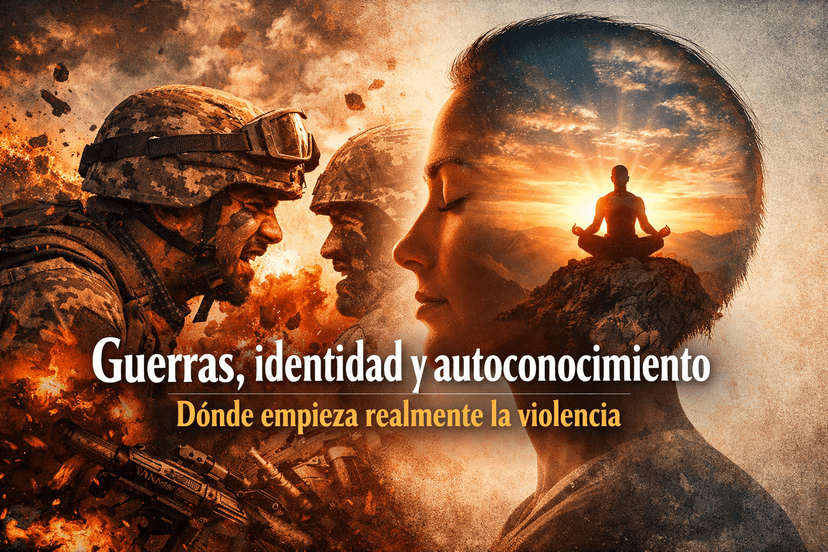
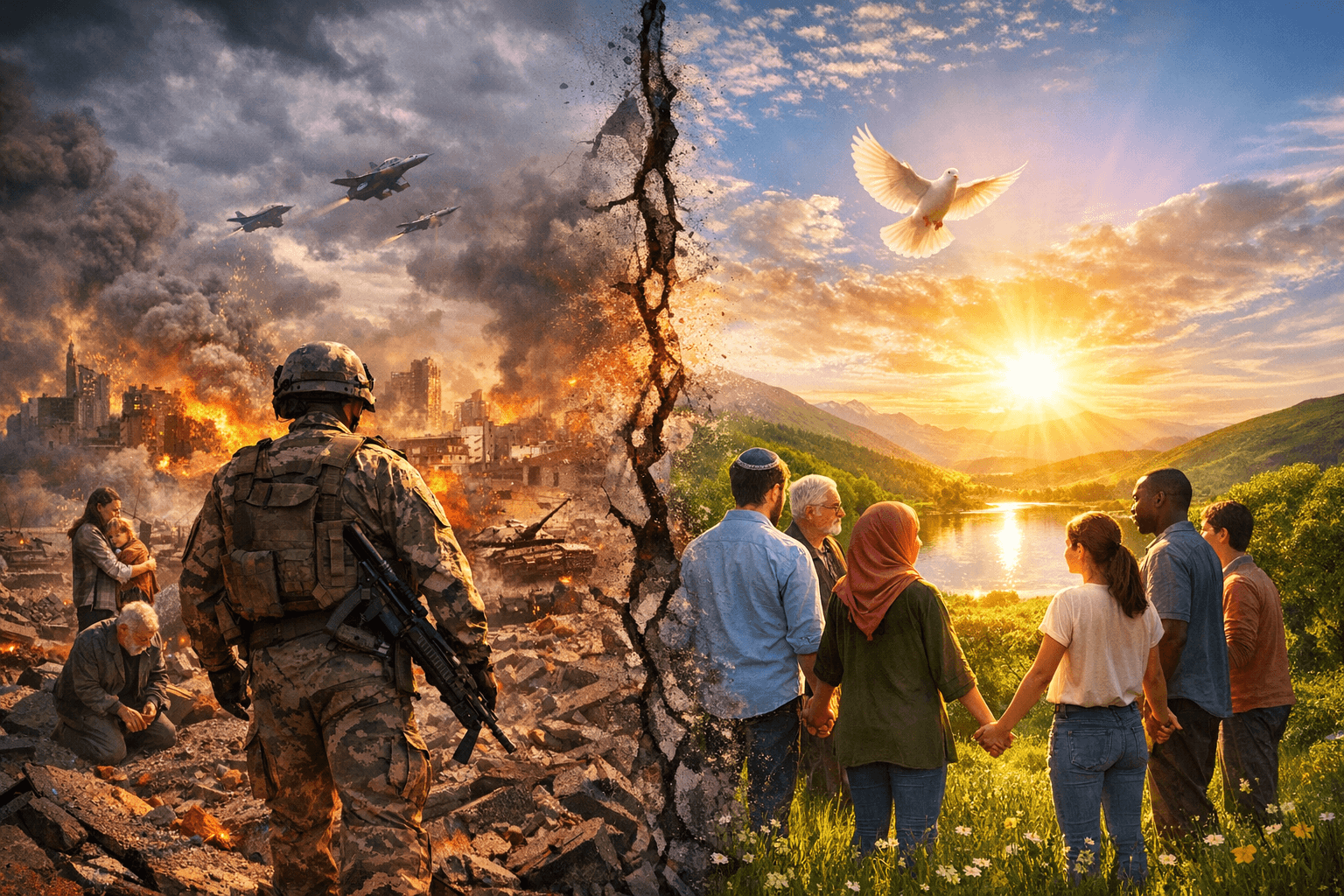
I believe wars do not begin in territories but in consciousness. What we see exploding outside is usually the visible form of something that had already taken shape within people and within societies. Kabbalah has insisted for centuries that the external world is a mirror of the collective interior. The Baal Shem Tov himself taught that what one sees in another is a message about oneself. He did not say this as a moral metaphor, but as a description of how reality works when it is observed from its spiritual root.
For that reason, I find it difficult to believe that there can truly be a war between the good and the evil. That binary reading is far too simplistic, and it usually belongs to a level of consciousness that is still immature, one that divides reality into absolute sides in order to feel secure.
Isaac Luria explained that the world is in a process of tikún (rectification) because it is made of fragments that have forgotten their common origin. When someone believes that evil exists only outside themselves, what they are really doing is protecting their own fragmentation and denying their inner darkness. That gesture itself already becomes part of the conflict.
The problem is not only that this vision simplifies the world. It also allows us to dehumanize the other. When you turn someone into a symbol, an enemy, or a category, you stop perceiving their divine spark. In that moment you deny them entirely.
The Zohar warns precisely about this when it insists that all souls share a single root even when they express themselves in opposite ways. To deny that common root is a form of mental idolatry, because it absolutizes a partial identity and turns it into the whole truth. It is one part telling the totality that only my part contains the Truth.
I also think that blaming political leaders alone is a comfortable trap. Visible leaders are always an expression of the inner state of the society they govern and a mirror of its shadows. They do not appear out of nowhere. They emerge because they embody traits that are already latent in the collective consciousness.
If a society is dominated by fear, resentment or the need for superiority, that will eventually take political form. The names and the flags may change, but the deeper structure repeats itself.
From that perspective, responsibility becomes uncomfortable but also liberating. If what creates friction in me has something to do with me, then every conflict I perceive also becomes material for inner work. This does not mean denying injustice or justifying harm. It means not losing the opportunity to understand which part of me could become exactly what I reject if certain circumstances were to arise.
The sages insisted that the true spiritual work does not consist of fleeing from evil but of refining the root that makes it possible.
Perhaps wars will end when there are no longer enough people capable of sincerely believing in absolute sides, in good and evil camps. Not when one side defeats the other, but when the human mind no longer needs to divide reality and confront it in order to sustain its identity. As long as that need remains alive, history will find ways to express it.
In the end everything returns to the same point. The world does not change simply because external structures change. It changes when the state of consciousness from which people sustain it changes. And that work, uncomfortable as it may be, never begins outside. It always begins within oneself.