Years ago, at the fortieth anniversary of the United Nations, Krishnamurti delivered a memorable speech about the violence that arises from identification. After presenting his vision, a political representative, with a tone somewhere between arrogance and mockery, tried to corner him with a practical question. He asked what a man who advocates peace would do if, upon arriving home, he found his wife kidnapped by a criminal. Krishnamurti answered calmly that he would do what is right. The politician insisted, what is right. And he replied, you have not understood, I would do what is right.
The exchange seems simple, yet it contains a depth we rarely wish to confront. The politician was asking from the need for a universal rule, a formula applicable to every situation. Krishnamurti was answering from a different state of awareness, one that understands that what is right is not a fixed prescription but a living response that depends on who is acting and from where they are acting. There is no single way to do what is right, because every situation also tests the level of consciousness we have reached.
Every friction that appears in our lives reveals something about us. I do not speak of guilt, that concept builds nothing, but of responsibility in its most radical sense. If something wounds me, it is because there was already a vulnerable place within. No one can pierce you where there was no prior opening. This is one of the most uncomfortable teachings of any mystical tradition, yet also one of the most liberating.
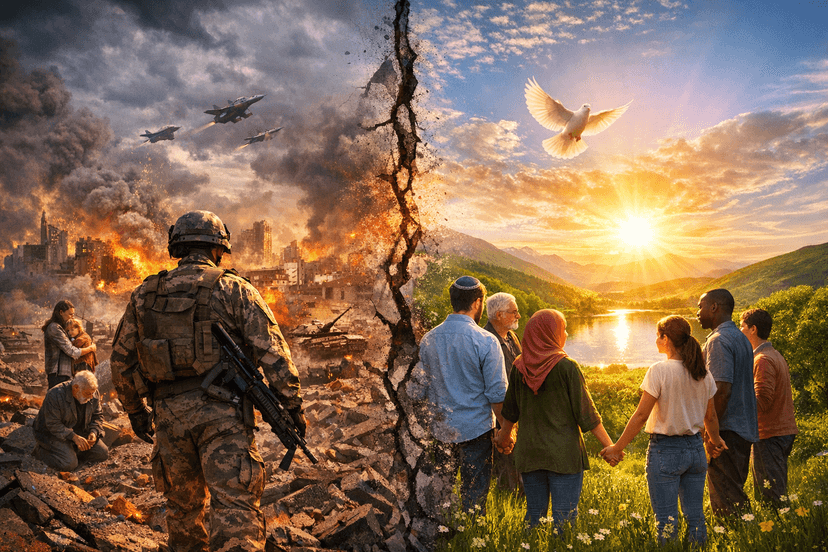
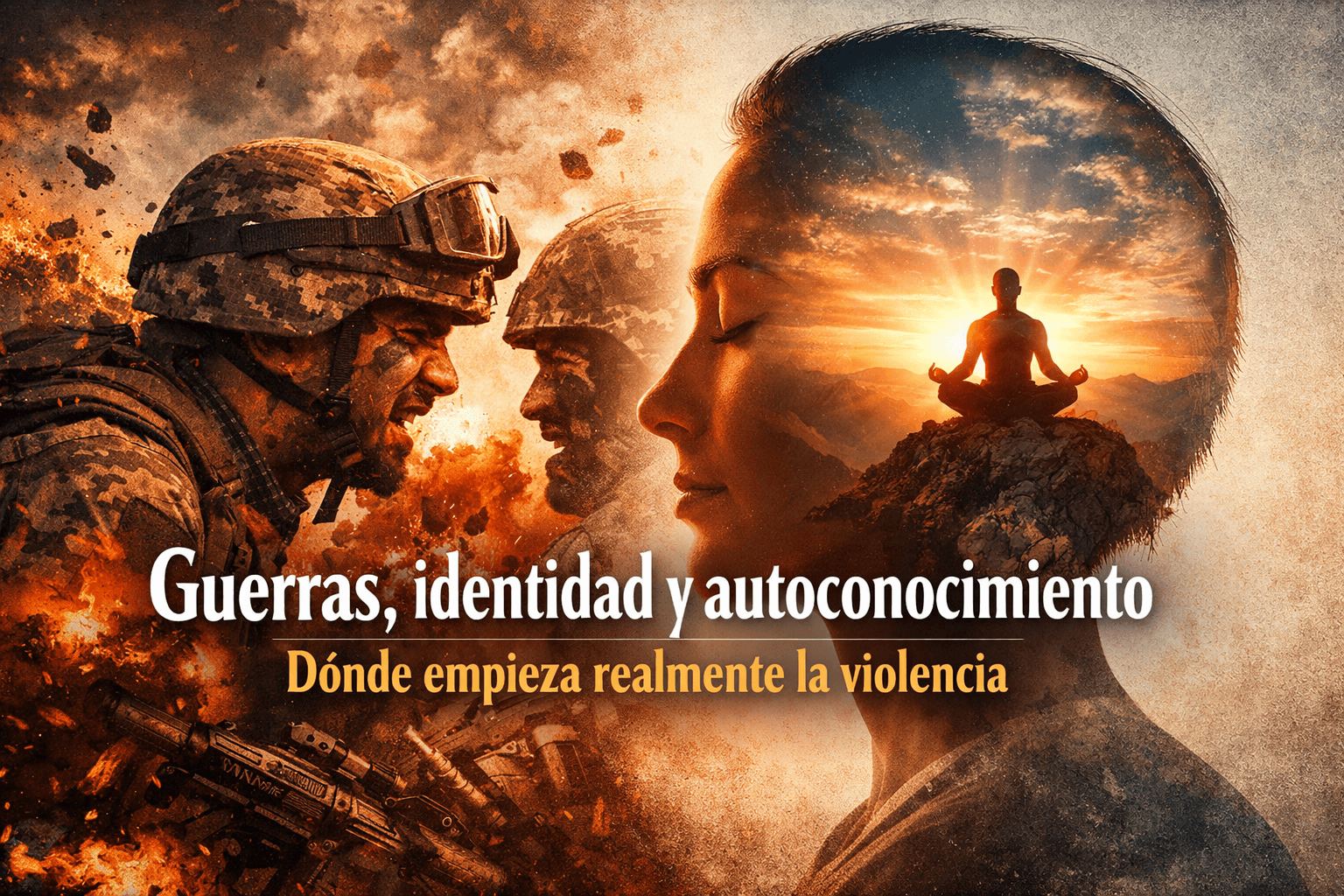
When I observe wars and collective conflicts, I see the same mechanism magnified. Violence rarely begins on the battlefield. It begins in the mind that identifies. We define ourselves as belonging to an ideology, a nation, a tradition, a movement, and that identification gradually takes the place that awareness should occupy. Identity, which is psychologically necessary in order to have stable ground, becomes an idol.
The problem is not having an identity. We all need a framework from which to live. The problem arises when we worship that framework and stop questioning it. When someone feels proud of being left-wing or right-wing, for example, they are recognizing that psychologically they connect more easily with one type of energy than with another. That in itself is not negative. What generates violence is turning that inclination into an absolute and seeking a reality that validates our imbalance instead of working toward inner balance.
The same happens with national identity. It is natural to love the culture that shaped us and to value the virtues we believe it contributes to humanity. But when that love becomes exclusive pride, any friction with another nation is perceived as a personal threat. Instead of asking what in our own structure needs revision, we prefer to dehumanize the other and turn them into an enemy. At that moment, we are already connected to violence, even if no shots have yet been fired.
In the Kabbalistic tradition there is the idea of tikun, which can be understood as the inner work of correction each person is called to undertake. From that perspective, every conflict is an opportunity to elevate our state of awareness, not to reinforce our identity. Friction does not arrive so that we defend the ground we stand on with greater force. It arrives so that we may release that ground and reach a broader and more balanced one. Attachment is what transforms difference into threat.
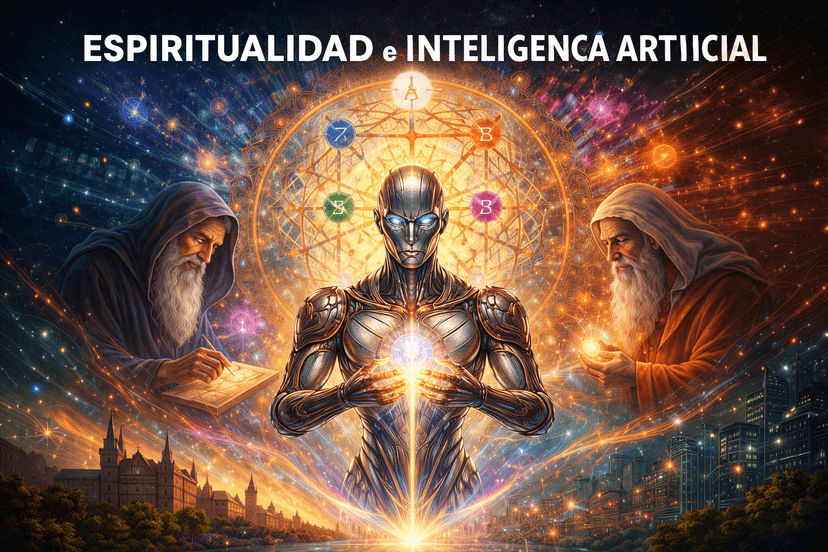
Even spiritual knowledge can become a trap. We may feel more conscious than others, more awake, more aligned, and from that position begin to believe we are necessary to save the world. That feeling of necessity is a refined form of idolatry. We identify with our own state of awareness and forget that if someone is ready to receive insight, life has infinite ways of bringing it to them without depending on us.
Within the Hebrew tradition there is also the idea that even forces that appear to obstruct the good serve a function of purification. The adversary, the conflict, even the one who wounds us, may be revealing a weak point that needed to be seen. If we respond from pride, we reinforce the wound. If we respond from awareness, we transform the wound into learning.
It is not easy to live this way. It requires constant inner vigilance. It demands that we observe ourselves when something touches our convictions or our identity. I do not always succeed. But each time I manage to witness the reaction before acting, a small opening appears in the automatic mechanism of violence.
Perhaps we could learn something from martial arts. At the end of a fight, both opponents bow to one another. They do not celebrate the defeat of the other. They express respect, recognizing that without the blows they would not have discovered their weaknesses. Without those impacts there would be no growth.
Maybe the true path toward peace does not lie in imposing one identity over another, but in recognizing that every conflict reveals a part of us that still needs to be understood. There is no definitive solid ground. Each day and each friction invite us to let a former version of ourselves die so that something broader may emerge.
Where is the right path for each person. Only each one can know. And it is rarely the most comfortable one.