
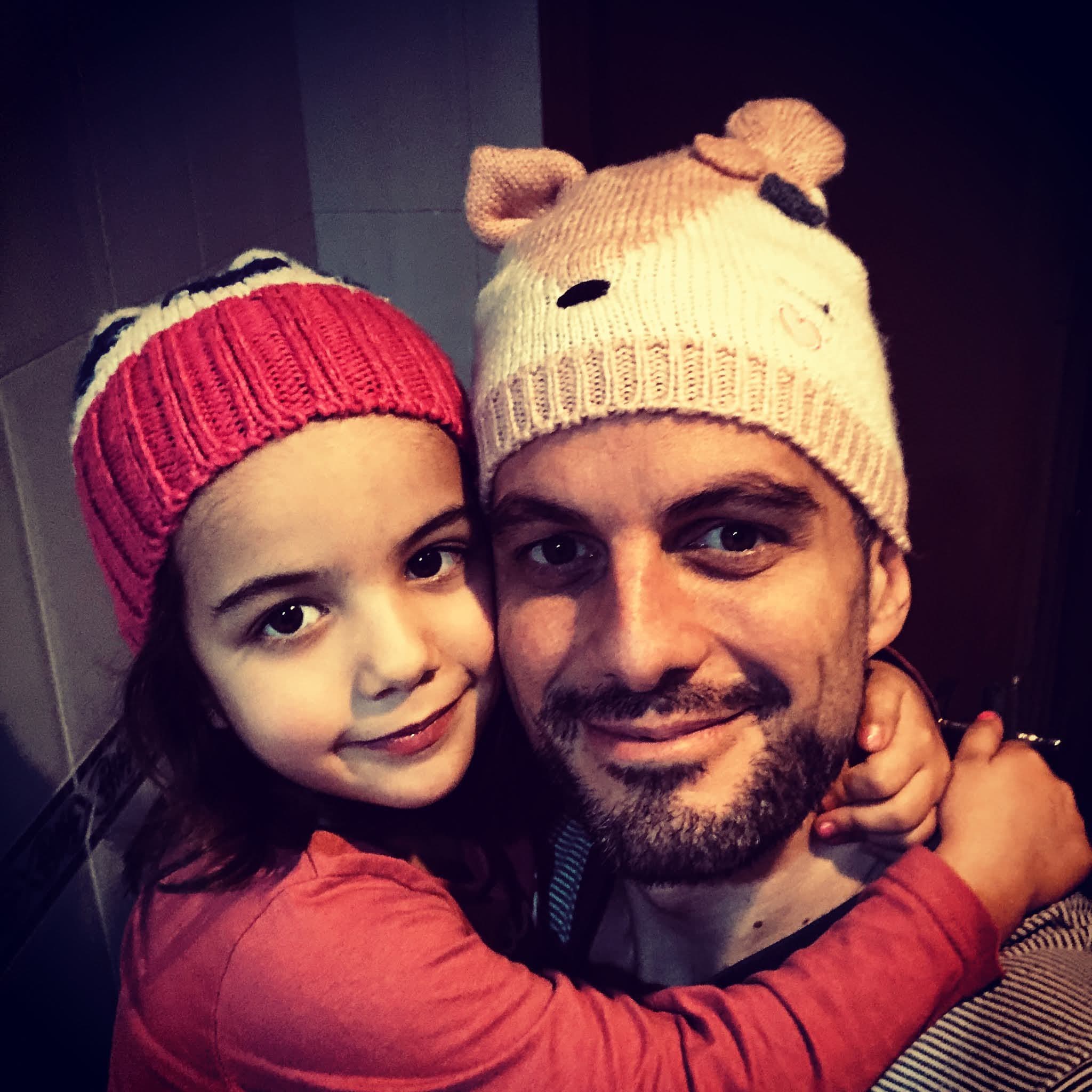
And I say “to exercise” because one thing is to be a father, and quite another to assume the responsibility of acting as one.
I have read many articles about entrepreneurship that discuss how to build a business while also being a parent, but I wanted to reflect on my own experience from a different perspective, beginning with what truly matters, not with entrepreneurship.
I must admit that becoming a father was one of my great dreams in life. I have always been fascinated by loving, by assuming responsibility and by building something meaningful. Nothing seemed more exciting or more worthwhile to me than helping to shape a new human being whom I could love unconditionally.
Before going into details about my experience so far, I would like to clarify that my last intention would be to pretend I know how anyone else should raise their children. There are a few widely accepted patterns about educational approaches that can harm a child’s development, but there is no instruction manual that explains the correct response to every situation at every moment.
For that reason, I have approached fatherhood as an initiatory path, another way of getting to know myself and demanding a better version of myself in order to help plant the right seeds in my daughter through example.
As with any project I start, the first thing I did was imagine how I would like things to look in the long term. That is why I feel enormous respect when it comes to giving advice about parenting. I would never intrude into something so intimate unless someone explicitly asked me to. But if someone close to me seeks a second opinion about how to act with their child in a particular situation, I usually answer that it depends on the kind of person they hope their child will become.
The main challenge we set ourselves as parents is simple. We hope that one day our daughter can be recognized, in general terms, as a good person.
As secondary goals, we hope to encourage enthusiasm for knowledge, reflection, critical thinking and reading. We also want her to develop a strong sense of responsibility, resilience in the face of frustration and the discipline necessary to live an orderly life, to set goals and sometimes even achieve them.
To achieve that first and essential objective, we both believe that example is the only real way to teach. Since becoming parents, we have therefore increased our critical awareness of our own behavior in order to improve it. It saddens me when I see parents who are very concerned about their children being well dressed and perfectly groomed while, at the same time, they criticize relatives on the phone, shout frequently, speak badly to others, argue loudly or create tension in front of their children. Do they not realize that children are like sponges, that we are their references, and that everything they see and hear will inevitably influence their future?
Another factor that seemed personally important to us was encouraging some form of spiritual sensitivity in her. We thought this could serve as another support in her journey toward becoming a good person. Although we are not Catholic, we enrolled her in religious studies at her public school. It did not matter too much which religion it was, as long as it had Abrahamic roots. For now, we simply want her to develop a sense of transcendence that moves her away from crude and empty materialism. When she grows a little older, we will introduce her to other traditions and to the fascinating world of comparative religious studies.
In my very modest opinion, the death of the spirit is one of the great problems that has affected Europe since the Enlightenment. By distancing ourselves from natural laws and from a transcendent spirit, we have entered an era of empty and superficial societies. Many people have developed an unshakeable faith in randomness and an excessive devotion to hedonism, overstimulation, immediate rewards and indifference toward deeper questions. We become slaves to what is urgent while forgetting what is important, all without a foundation that helps us understand life more deeply.
From that point onward, daily life becomes relatively simple. We try to care for our own conduct so that we can offer the best possible example, and then we talk, we talk a lot. I love reflecting with my daughter about questions of behavior and I have done so as if she were an adult since she was three years old. We have spoken about life, death, justice, empathy, bullying, good and evil, knowledge, freedom, discipline and many other topics that will eventually shape the emotional foundation of her stability.
I should also say that during her first three years we invested a great deal of time in smiling with her in order to nurture her self-esteem. I remember going to bed at night with sore jaw muscles from smiling so much. We decided that hugs, affection and smiles would be our way of inspiring enthusiasm, joy and confidence.
Regarding the secondary goals, we have always tried to nurture her curiosity about learning. Inspiring someone to want to learn is more important than what they learn. That is why, since she was very young, Sundays have become our “research days.” We choose a relevant figure from history, watch explanatory videos about that person and write down the most important points on cards that we keep organized. The important thing is not that my daughter now knows that Marie Curie won two Nobel Prizes and discovered radium and polonium, or that Cleopatra began ruling Egypt at eighteen. What matters is that when she wakes up on Sunday morning she runs toward me, excited and jumping, to remind me that it is our research day together.
The taste for reflection and reading is inspired through example. She sees reading every day at home, so it feels natural to her. She also knows that before reaching conclusions it is better to think things through, and that acting impulsively rarely ends well. If you ask her what the two most important things in life are, she will answer that one should have a clean heart and an orderly mind. For now, simply being aware of that idea is more than enough.
Encouraging a sense of responsibility has much to do with how responsible you are in exercising fatherhood. Let me give a simple example. We all know that for the education and future of our children it is best that they learn to dress themselves, eat by themselves, comb their hair, make their bed, bathe and brush their teeth from an early age. If this is someone we love more than anyone else in the world and we truly care about their future, why do we not always allow them to do these things? I will tell you why. Laziness and selfishness.
It may sound harsh, but when you dress your four-year-old child yourself, you usually do it to finish more quickly and avoid waking up earlier. When you feed a three-year-old instead of letting them try, you do it so they will not make a mess. When you hang up the coat that your five-year-old left on the floor, it is because it takes less effort to do it yourself than to insist until they do it. Yet that laziness contributes to the person you love most having fewer opportunities to develop habits of responsibility that will later allow them to live independently and happily.
As for resilience to frustration, we have a serious problem with this in the West. We are already beginning to experience the consequences of overprotecting an entire generation, raising them in extreme comfort where the greatest concern was deciding which country to visit during Erasmus to drink, party and travel.
That is why so many people today struggle to tolerate frustration and pain. That is why marriages break at the first difficulty and projects are abandoned at the first obstacle. That is why athletes like Rafael Nadal or Roger Federer find so few rivals capable of enduring the same discipline. That is also why empathy and forgiveness sometimes seem scarce, and why depression and psychological difficulties appear when many young people finally confront the responsibilities of independence. In many cases, it is because they were never allowed to experience frustration and learn how to deal with it.
Let the child sleep with us because they are afraid. Do not punish them because they feel bad. They are crying, run immediately to see what happened. Pick them up quickly when they fall. Rooms full of toys and stimulation. And no one should dare to bother my child or I will confront not only the child but also the parents. And the teacher should never dare to scold them.
Congratulations. You may be contributing to raising a fool.
The most troubling aspect is that this spirit of overprotection often comes not from love for the child but from a need to feel emotionally important as parents.
This brings us again to the question of transcendence. We live in a society so empty of meaning that many people use parenthood to fill that void. The emotions they experience while parenting become more important than the responsibility of raising someone capable of facing life. They enjoy the dependence of their children and fear their independence.
Do you think it was easy for me to let my daughter cry herself hoarse in her room after a tantrum until she calmed down? Do you think I do not feel the instinct to run and lift her every time she falls, even when I know it is not serious? Do you think it does not hurt instinctively when another child bothers her or when a teacher raises their voice?
Of course it does. But I also know that these experiences help her learn to deal with frustration and resolve it by herself. Her development as a person matters more than my emotional comfort as a father.
She is only five years old, but she already knows what tasks belong to her and she has routines. The beginnings are always difficult, but once children become accustomed to independence and understand that you will not rescue them from every challenge, everything becomes easier.
As for balancing demanding work such as entrepreneurship with fatherhood, there is no secret formula. It simply requires organization and a deep respect for the schedule you establish for both. I would never cancel an afternoon planned with my daughter for a meeting or a call. But there is time for everything. My daughter is part of the company. Everyone knows her because she has been present in meetings and calls. Work has never been an excuse to avoid responsibility as a father, and entrepreneurship gives you a certain freedom in that regard.
One thing I have done since she was very young is to make sure that whenever I leave for work she sees me enthusiastic. I always tell her that I am going to work to have fun. Because of that, she associates work with enjoyment and always wants to come with me to the office. She loves using her toy phone to help us with tasks in the company.
Finally, I do not want these reflections to sound like some revealed truth. They are simply conclusions drawn from my own experience, after many attempts, many mistakes, moments of impatience and a lot of trial and error. I have also read about education along the way, and I highly recommend the reflections of Krishnamurti. Above all, I have tried to cause as little harm as possible to my daughter through my own imperfections.
I am fully aware that her future depends only on her, and that her success will be the result of her own decisions and achievements. But it is worth caring about this process and educating ourselves, because a bad example can cause real harm, and parenthood is a wonderful opportunity to bring out the best version of ourselves.
We live in a time of great change, and every effort we make so that our children do not inherit our mistakes is a meaningful contribution to building a better world.
Parents, like the state, should be careful not to get in the way. That may be the best we can achieve.
Good luck, and enjoy the journey.