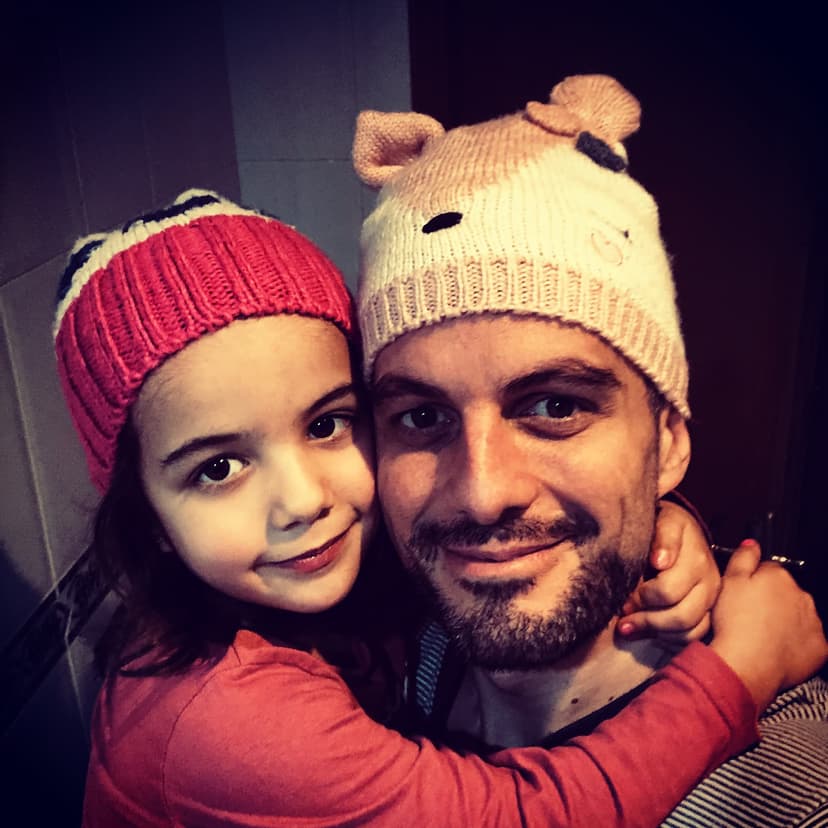
Once again, I use writing to put my thoughts in order, to reflect in silence, and to allow my daughter, someday if she wishes, to discover what was going through her father’s mind around this time.
I will begin with the obvious. Not only do I not consider myself to be in possession of the truth, I firmly believe that it is impossible to fully encounter it. I understand Truth as a path rather than a destination. My reflections arise only from a very specific personal and professional experience, and at best they can aspire to serve as one more point of support from which to reach more or less accurate general conclusions.
You are therefore entirely entitled to distrust me. I have not yet mentioned it, but I am a businessman.
And a vocational one, to make matters worse. I am passionate about imagining businesses, building a team and trying to make it grow. Some strange creative impulse, and to some extent even a slightly masochistic one, has made me dream of creating companies for as long as I can remember.
My starting point was never comfortable. Without a safety net and without close references in the business world, my inexperience and ignorance led me to make countless wrong decisions in my early attempts. I closed companies badly and endured the emotional pain and impact that comes with it. It seems that path was necessary to shape my education as both a human being and a professional. But starting a business in Spain without a safety net is an experience I would not recommend to anyone unless it is truly vocational.
You should know that Rome did not forgive traitors, but Spain does not forgive entrepreneurs.
My view is that in Spain the entrepreneur is not respected, and I want to use this reflection not only to argue that point but also to speculate about its causes and consequences.
I would like to begin by clarifying something. When we speak about entrepreneurs, we are referring to all entrepreneurs. I say this because I have the feeling that, for some strange reason, when Spanish society talks about the business class, we instinctively picture only figures like Amancio Ortega, Juan Roig, or executives from IBEX companies who in many cases are not even entrepreneurs themselves. An entrepreneur is also Flora, who owns the fruit shop on the corner. Rosa, the veterinarian who always treats your pet with care. Antonio, who serves you food in his tavern. Or your cousin Miguel, who earns a living building websites.
The entrepreneur is the engine of the economy. The one who, putting their personal assets at risk and assuming legal responsibilities, sets out to create a company that generates employment and wealth for the country where they live. They work far more hours than any collective agreement stipulates because, unfortunately, the only agreement the self-employed have in this country is to always be the first to give and the last to receive.
The media bear part of the responsibility for all this. Business success is idealized. We constantly hear about the same few figures, about large corporations and about people who supposedly make enormous amounts of money, often accompanied by half-truths or outright distortions. What is rarely discussed are the real stories. How ordinary entrepreneurs survive in Spain. What conditions the self-employed face. What their unemployment protection is like. What their pensions look like. Their taxes, bureaucratic obstacles, employee costs, the treatment they usually receive from the tax authorities. Or the fact that around 80 percent of the jobs created in Spain come precisely from this type of entrepreneur. And finally, the social reputation they carry.
Because the problem, as usual, is not political. It is cultural.
Years ago, when I had a direct sales company, I decided to travel to Dallas in the United States to see firsthand how the fastest-growing companies in our sector were operating there. I simply could not understand their speed of growth and needed to see it with my own eyes. It did not take long for me to realize that I could never replicate that growth in Spain. It was not about methodology, procedures, work ethic or product. It was about culture.
I asked the company manager if I could go out selling with the sales team. I wanted to see the day-to-day reality in the field, to learn and to understand the differences. They took me to a gas station and we started selling car-cleaning sprays to anyone who stopped to refuel. I was having a great time when a Ferrari pulled into the station. A group of teenagers, perhaps between thirteen and sixteen years old, were skating nearby. They ran over and I assumed they were going to admire the car, but instead they went straight to speak with the man who stepped out of it. I thought he might be someone famous and moved closer out of curiosity, but the conversation surprised me.
They did not know him and he was not famous. What they were asking was what he had studied and what he did for a living to be able to own a car like that. The man explained that he owned a renovation company, what he had studied and how he had started working in the administration department of a construction firm. The teenagers kept asking questions, trying to extract the key elements of his story. What struck me was the respect with which they spoke to him and looked at him. The Ferrari had drawn their attention, but what they truly seemed to be searching for were the clues behind the story of effort and achievement that had led him there. It fascinated me.
I speak only from my humble and limited personal experience, but it has been very difficult for me to witness that kind of respect in Spain. Here the entrepreneur is often perceived as a permanent suspect, a greedy potential fraudster who wants to exploit others in order to enrich himself. Perhaps part of that comes from a very Spanish form of envy. Part of it may also come from our deeply rooted civil-service mentality. There is also a certain resentment among those who believe themselves very intelligent and have tried unsuccessfully. And surely there are other reasons as well. But the result is that this conception has penetrated so deeply that we have normalized something as strange for our time as having people with openly communist and anti-business ideals sitting in the government of our country and publicly attacking the business community.
Where does this self-destructive culture come from. Possibly from the fact that it contains a certain dose of truth. Spain is a very particular country. We carry in our cultural genes imperial enthusiasm, the cunning spirit of Lazarillo de Tormes, institutional fragmentation and a culture of quick speculative gains. For that reason the public conversation is filled with stories about favoritism, bribery, commissions, revolving doors, hand-picked concessions and a small number of large companies extremely dependent on public funds and therefore on the political class. These cases often do enormous damage to the general image of business.
If we add to this the representation of such an archaic and outdated institution as the CEOE, one can begin to understand, even if not to share, the social perception that has developed.
For that reason we should never miss the opportunity to exercise self-criticism and pedagogy. Self-criticism because Spanish entrepreneurs are the primary responsible actors in their current situation, not only through action but above all through omission.
The business community remains weakly structured. Its representative associations are often excessively formalistic and overly accommodating toward whichever government happens to be in power. Sometimes this attitude appears to be exchanged for subsidies or favorable treatment for those who lead those associations. What we rarely see are strong voices demanding space, respect and fair treatment.
In countries where society is as weakly structured as Spain and where political power is so dominant because of the weight of the public sector, raising one’s voice can be costly. Many prefer to live well rather than ensure that everyone lives better.
I understand that instinct, but we must also recognize that we are going through a dramatic economic moment. Now more than ever we must strive to be exemplary, step forward and invest resources in winning this cultural battle. Because in the end the consequences are not paid only by entrepreneurs. They are paid by all of us.
It is not a coincidence that Spain is among the slowest-growing economies in Europe. Nor that foreign investment is limited. Nor the shocking youth unemployment figures. Nor the structural difficulties we face in building a financially sustainable country. All of this emerges from a culture that shows little respect for the private sector in general and for entrepreneurs in particular.
Of course there are psychopathic, foolish and disgraceful entrepreneurs, just as there are in any other sector. I myself have made many mistakes and have had to face their consequences. But we must all make the effort to understand that the public sector cannot exist without the private sector. We need investment and we need entrepreneurs willing to take risks if we want to recover employment and rebuild the economy. Otherwise we will not have the resources to sustain many of the rights that today we take for granted.
It cannot be normal that when you go to the commercial registry or the tax office seeking help with a procedure, a young civil servant who has just obtained his position speaks to you harshly or looks down on you. It cannot be right that an entrepreneur is punished for life after failing in a first company. Now that they have gained experience they will be better prepared for their next attempt, and for that reason we should encourage them to try again as soon as possible rather than mark them forever. In Spain the idea of a second entrepreneurial opportunity remains largely utopian.
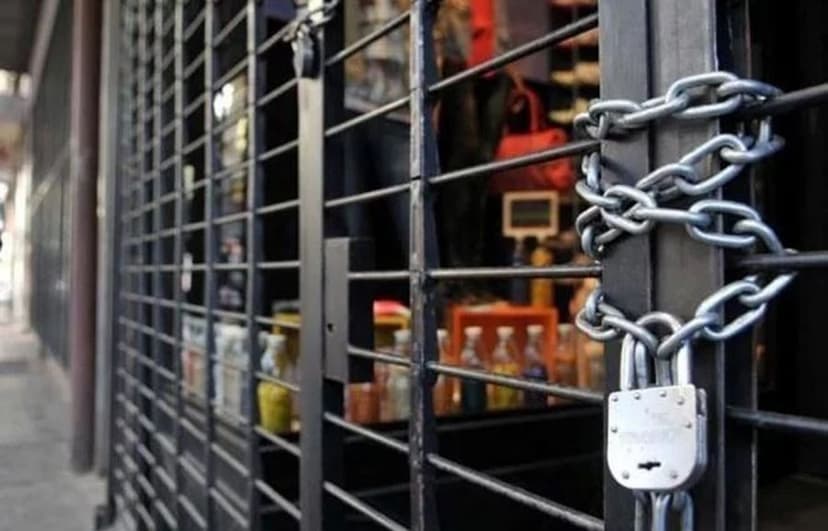
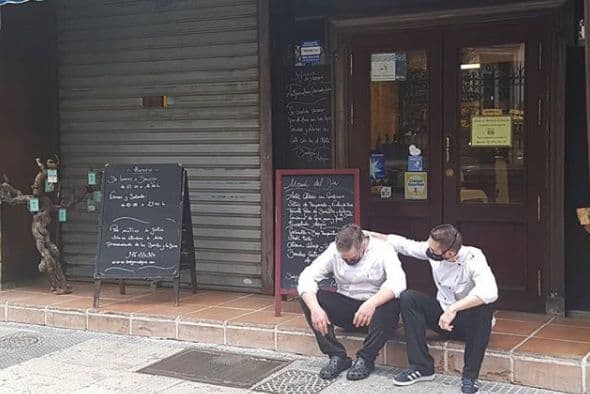
It cannot be right that after working sixteen hours a day in your bar just to survive and sustain self-employment, a government can violate the law by forcing you to close due to extraordinary circumstances without compensation while preventing you from exercising your freedom of enterprise, a freedom clearly recognized in the Constitution that politicians so often invoke when it suits them. Nor can it be acceptable that the business community remains passive and fragmented while these issues fail to occupy a central place in public debate, leaving its representation in the hands of corrupt or obsolete institutions.
It cannot be right that business associations remain submissive and cordial toward political power, responding to every invitation for a photograph while nothing actually changes. They have had and still have ample reasons to issue a press statement every day, yet those statements rarely appear.
It cannot be right that socially the entrepreneur is treated as suspicious by nature and presumed guilty, because generalization is always unjust and because we need the business community if we are to move forward.
This is only my view and I may well be mistaken. But Spain is going to change significantly in the coming years. I believe we are still not fully aware of the economic reality that lies ahead of us, and it will be much harder to overcome if we do not begin, once and for all, to respect the entrepreneur, beginning with the entrepreneur respecting and defending himself.
Because the entrepreneur is also the one who committed suicide during the crisis of 2008. The one who cries when he is forced to lay off an employee he appreciates and needs. The one who cannot pay his own personal bills yet continues paying salaries while praying that things will improve. The one who lives in daily uncertainty amid constant regulatory change and legal insecurity. The one who suffers family stigma when things go wrong. The one who goes to therapy to cope with the pressure. The one who gives everything to sustain jobs and finds himself alone when everything ultimately collapses. The one who receives little or no unemployment protection afterward. The one who fails in silence. And the one who, despite all these difficulties and stigmas, continues trying, waking early every morning to create employment and wealth for everyone else while hardly anyone in this country ever pauses even for a moment to recognize his work, show respect or simply say thank you.
So in the end that is all I wanted to ask for.
A little respect. Enough is enough.