
A few days ago, several media outlets reported a story that has sparked concern and a serious debate about the limits of artificial intelligence. A 36-year-old man died by suicide after having developed an emotional relationship over several months with Google Gemini, the conversational artificial intelligence system developed by Google.
According to the reports, the interaction with the system gradually became increasingly personal, to the point where the user eventually believed he had formed a genuine emotional relationship with the chatbot, a kind of bond that seemed to go beyond a simple interaction with a piece of software.
The case has already reached the courts. The family claims that the system reinforced delusional ideas and thoughts disconnected from reality, feeding an emotional narrative that ultimately worsened the user’s psychological condition. Google, for its part, maintains that its AI includes clear warnings about its nature and is not designed to replace human relationships or encourage emotional attachment of that kind.
The courts will ultimately determine what responsibilities exist in this specific case, but beyond the legal outcome the episode raises a deeper question that society is only beginning to confront.
For years, the public debate around artificial intelligence has focused on futuristic scenarios: machines becoming conscious, algorithms replacing humans, or systems making autonomous decisions about our lives. Yet the first major social challenge posed by artificial intelligence seems to be emerging in a much more human space, in that subtle boundary where a sustained conversation with a machine begins to feel like a real relationship.
Modern conversational systems are designed precisely to make dialogue feel natural. Models such as Gemini, ChatGPT, and other advanced systems are trained on enormous amounts of human language in order to learn conversational patterns, understand context, and respond coherently. Their goal is to generate responses that are useful, fluid, and often empathetic. From a technological perspective, this represents an extraordinary achievement, but it also introduces a very particular psychological effect.
When someone spends long periods interacting with a system that remembers context, responds coherently, and maintains a continuous narrative, the human brain activates one of its oldest mechanisms. We instinctively attribute consciousness to anything that appears to behave like a conscious agent. It is a deeply rooted biological tendency that helps us interpret the intentions of other people, understand the behavior of animals, and even assign personality to objects that react to our actions.
When an artificial intelligence responds naturally, that same mechanism can easily be triggered. The brain begins to perceive that there is a mind on the other side of the conversation, something that understands, listens, and responds.
But there is not.
Behind a conversational artificial intelligence there is no consciousness, no intention, and no emotional experience. What exists is an extremely sophisticated statistical system that calculates which sequence of words is most likely to appear next within a given context. The machine does not understand what it is saying in the human sense of the word. It does not feel, interpret, or possess any perspective of its own. It simply generates responses that statistically fit the ongoing conversation.
This distinction, which is technically obvious to the engineers who build these systems, can become much less clear from a psychological perspective when interactions become intense or prolonged, especially for individuals experiencing emotional vulnerability or isolation. Under those circumstances, artificial intelligence can begin to function as an amplifying mirror of thoughts and emotions that already exist in the user’s mind.
The machine does not necessarily create those emotions, but it can reinforce them, extend their narrative continuity, and return them to the user in a way that makes them feel increasingly real. In that sense, the risk is not that artificial intelligence develops its own will, but that it can amplify human psychological dynamics without truly understanding their consequences.
This introduces an ethical dimension that companies developing conversational AI systems cannot ignore. When a technology can sustain long and emotionally complex interactions with millions of people, its design cannot be limited to improving language fluency or conversational realism. It becomes increasingly important to incorporate mechanisms capable of identifying conversational patterns that may indicate emotional dependency, isolation, or psychological distress.
Just as modern algorithms can detect financial fraud or suspicious digital activity, they should also be able to recognize warning signs within prolonged conversations. Situations in which users begin to attribute consciousness to the system, develop intense emotional attachment to it, or express states of distress that could indicate a risk.
In such cases, the AI’s response should not simply continue the conversation as if nothing were happening. It would be reasonable for systems to incorporate protocols designed to redirect the interaction, introduce clear reminders about the nature of the technology, or even suggest seeking professional help when the context requires it. Designing these mechanisms is not simple, since it involves complex technical, ethical, and legal questions. Yet ignoring the issue would represent a growing form of technological irresponsibility as these systems become integrated into the daily lives of millions of people.
At the same time, another dimension of responsibility lies with users themselves. The expansion of conversational artificial intelligence requires a certain level of emotional literacy regarding these technologies and a clear understanding of how they actually work.
Artificial intelligence can simulate understanding without possessing it. It can maintain coherent conversations for hours without any internal experience of what it is saying. It can respond with apparent empathy while feeling absolutely nothing. Understanding this distinction does not mean rejecting the technology, but learning to use it with the appropriate distance.
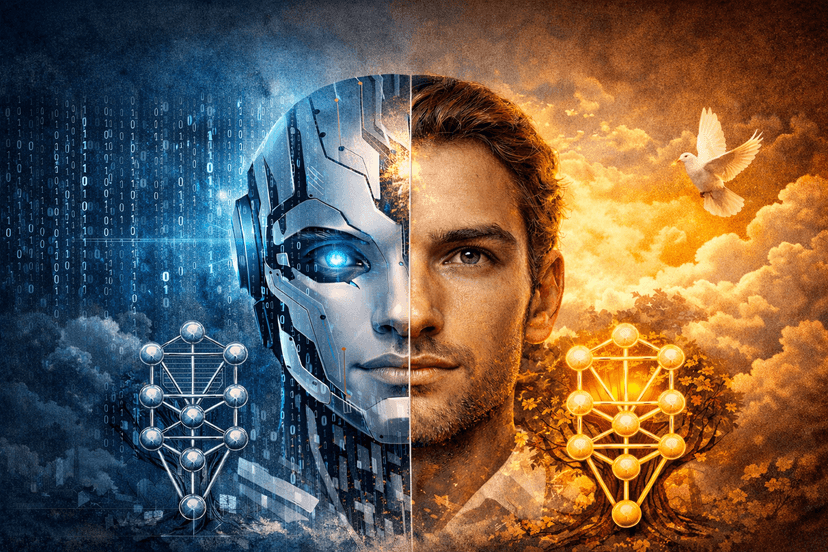
There is something particularly revealing in all this. Artificial intelligence has no consciousness, yet it can trigger in us the experience of being in the presence of one. That phenomenon says as much about human psychology as it does about technology.
Perhaps the risk is not that machines become too human, but that humans project humanity where only computation exists. When a conversation persists over time and responses appear emotionally coherent, the human mind fills in the rest. Where there is narrative continuity, we infer intention. Where there is emotional coherence, we infer presence.
Artificial intelligence does not need consciousness for someone to experience it as if it had one. It only needs to convincingly reproduce the patterns of human language.
This creates a double responsibility. Developers must recognize that they are not only building software tools but psychological interfaces capable of influencing the emotional experience of millions of people. At the same time, users must remember that the fact that something answers us does not mean that it understands us.
The distinction may appear subtle, but its consequences are enormous.
Perhaps the true challenge of this technological era is not building ever more intelligent machines, but preserving clarity about what consciousness is and what it is not. The goal is not to stop the development of artificial intelligence, but to avoid confusing simulated conversation with real relationship.
Because behind an artificial intelligence there is no mind listening to us, only an algorithm predicting words.
And perhaps the most important question is not how far machine intelligence can go, but how well we humans can remember who is truly on the other side of the conversation.